

Masoud Mohseni, Ph.D. is a Senior Distinguished Scientist and Director of HPE Quantum at Hewlett Packard Labs, where he leads the Emergent Machine Intelligence group and architects next-generation quantum supercomputing systems. His work focuses on the deep integration of quantum computing, high-performance computing (HPC), and artificial intelligence into a unified computational stack—an approach aimed at enabling utility-scale quantum systems. Dr. Mohseni is a co-founder of the Quantum Scaling Alliance (QSA), an industry consortium uniting leaders across quantum hardware, control systems, and semiconductor technologies to address the challenges of scaling quantum computing from hundreds to millions of qubits. Prior to joining Hewlett Packard Enterprise, he spent a decade at Google Quantum AI, where he led the development of quantum machine learning systems and co-created TensorFlow Quantum, an open-source platform for hybrid quantum-classical machine learning. He has also contributed to foundational quantum algorithms, including quantum PCA, quantum support vector machines, and quantum Boltzmann machines. Earlier in his career, Dr. Mohseni was a principal investigator at the Research Laboratory of Electronics at MIT. His research spans quantum information science, many-body physics, and statistical learning, with contributions influencing areas such as quantum tomography, quantum optimization, and quantum effects in biology.

İlkay Altıntaş (SDSC, UC San Diego) is a research scientist at the University of California San Diego, the Chief Data Science Officer of the San Diego Supercomputer Center, and a Founding Fellow of the Halıcıoğlu Data Science Institute within the School of Computing, Information, and Data Science. Specializing in scientific workflows, scalable computing and data systems, her research enables collaborative teams to deliver impactful results and sustainable solutions by making computational data science and AI more reusable, programmable, scalable, accessible, and reproducible. She is the Founding Director of the Societal Computing and Innovation Lab, which focuses on novel approaches to creating breakthrough technological innovations that address complex scientific and societal challenges. Her work has been applied to many domains including bioinformatics, geoinformatics, high-energy physics, material science, multi-scale biomedical science, smart cities, and smart manufacturing. She is also the Founder of the WIFIRE Program for wildland fire innovations and the Principal Investigator of the NSF National Data Platform, the Wildfire Science and Technology Commons, and other diverse grants that advance scalable computing, AI, and data systems across the digital continuum from edge to HPC. Her honors include the 2015 IEEE TCSC Award for Excellence in Scalable Computing for Early Career Researchers and the 2017 ACM SIGHPC Emerging Woman Leader in Technical Computing Award. She serves on the elected Board of Governors for the IEEE Computer Society and was appointed by California Governor Gavin Newsom to the Wildfire Technology Research and Development Review Advisory Board. Ilkay received her Ph.D. from the University of Amsterdam.
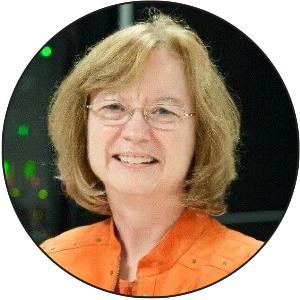
Amy Apon has been a Program Director in the Office of Advanced Cyberinfrastructure since January 2023. She is the lead Program Director for the Campus Cyberinfrastructure program. Apon joined NSF through the Intergovernmental Personnel Act in January 2023 from Clemson University. At Clemson, she served as Chair of the Computer Science Division and later as Director of the School of Computing. She holds a PhD in Computer Science from Vanderbilt University and conducts research in parallel and distributed computing systems.

Ben Brown is the Director of the Facilities Division in the Advanced Scientific Computing Research (ASCR) program in the DOE Office of Science, an $780M portfolio encompassing DOE’s high performance computing, networking, and data user facilities and major projects for open science. In this role Ben is also part of the HQ leadership team implementing the Genesis Mission, and the architect of DOE’s Integrated Research Infrastructure (IRI) initiative. Among other previous roles, Ben served as the federal program manager for ESnet from 2017-2021 and for the DOE Project Leadership Institute from 2014-2022. He is a Ph.D. physicist by background with specialization in optical physics and quantum information science.
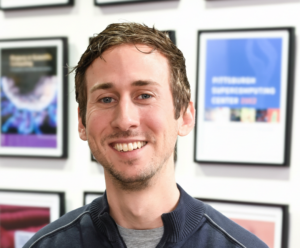
Stephen Deems is Director, Research Infrastructure Operations at Internet2, supporting the transformation of community needs into operational research infrastructure services that advance Internet2’s mission within the national cyberinfrastructure ecosystem. He has more than 13 years of experience in managing complex, large-scale, and high-impact initiatives in advanced cyberinfrastructure, life sciences, data management, and artificial intelligence across the NSF and NIH funding landscape.
Prior to joining Internet2 in 2026, he served as Director of Strategic Initiatives at Pittsburgh Supercomputing Center within Carnegie Mellon University (CMU) after leading their project management team. He most recently served as the Principal Investigator for the NSF-funded ACCESS Allocations Service award and was the Allocations Team lead for the National Artificial Intelligence Research Resource (NAIRR) Pilot. He has received funding from the U.S. Department of Defense in collaboration with CMU’s AirLab to advance autonomous robot research.

Dr. Deotare is Chen-Luan Family Faculty Development Professor, Associate Professor of Electrical Engineering and Computer Science, and Physics at the University of Michigan. The Excitonics and Photonics lab that he directs focuses on understanding and manipulating excitonic energy in low dimensional materials for applications in data communication, assured electronics, and sensing. He received his Ph.D. from Harvard University (2012) and completed postdoctoral research at MIT. His honors include the AFOSR Young Investigator Award (2017), Chen-Luan Family Faculty Development Professor (2025-2030), EECS Outstanding Achievement Award (2025), and HKN Professor of the Year (2017). His research efforts have led to the founding of AUTHENTIQ CORP, a spin-off company dedicated to assured electronics solutions.

Dr. Sandra Gesing is a Senior Researcher at the San Diego Supercomputer Center, the Director of the NSF Center of Excellence for Science Gateways and the Executive Director of the US Research Software Engineer Association. Her research focuses on science gateways, computational workflows as well as distributed and parallel computing which inherently leads to highly interdisciplinary projects. She is especially interested in sustainability of research software, usability of computational methods and reproducibility of research results and she supports open science initiatives. Prior to the position at DPI, she was an associate research professor in the Department of Computer Science and Engineering and a computational scientist in the Center for Research Computing at the University of Notre Dame, Indiana, US. Before she moved to the US, she was a research associate in the Data-Intensive Research Group at the University of Edinburgh, UK, and in the Applied Bioinformatics Group at the University of Tübingen, Germany. Additionally, she has perennial experience as a project manager and system developer in industry. As head of a system programmer group, she has led long-term software projects (e.g. infrastructure on web-based applications). She received her German diploma in computer science from extramural studies at the FernUniversität Hagen and her PhD in computer science from the University of Tübingen, Germany.

Forough Ghahramani is a senior executive leader in research, innovation, and advanced technology ecosystem development, with experience spanning industry, academia, and entrepreneurship. As Assistant Vice President for Research, Innovation, and Sponsored Programs at New Jersey Edge, she operates at the intersection of research infrastructure, economic development, workforce strategy, and public–private partnership building to strengthen regional competitiveness in AI, quantum, and emerging technologies. She previously served on the executive leadership team of the Rutgers Discovery Informatics Institute, advancing interdisciplinary research growth and large-scale institutional partnerships.
Dr. Ghahramani began her career at Digital Equipment Corporation and Hewlett Packard, leading high-performance computing initiatives and advising Fortune 500 organizations, and later founded entrepreneurial ventures focused on technology commercialization.
She leads and collaborates on federally funded initiatives focused on regional cyberinfrastructure, AI, and emerging technologies, with a consistent emphasis on expanding access and strengthening talent pipelines. A Senior Member of IEEE, she serves on the NSF Engineering Research Visioning Alliance (ERVA) Standing Council, is Vice President of the New Jersey Big Data Alliance’s Advanced and Emerging Technologies, serves on the Steering Committees of the Northeast Big Data Innovation Hub and the Ecosystem for Research Networking (ERN), and co-chairs the ERN Broadening the Reach committee and Quantum Education Alliance. She is consulted nationally and internationally on STEM workforce and innovation ecosystem strategy.
Ghahramani holds a doctorate from the University of Pennsylvania, an MBA from DePaul University, an MS in Computer Science from Villanova University, and a BS in Mathematics from Pennsylvania State University.
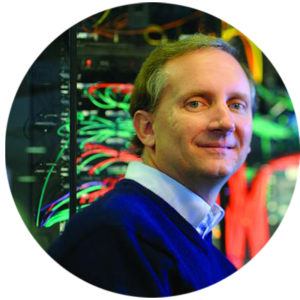
James Griffioen is a Professor of Computer Science and the Director of
the Laboratory for Advanced Networking at the University of Kentucky. He also serves as the Director of the University of Kentucky Center for Computational Sciences. His research interests include future internet architectures, network services, network measurement, high-performance computing, and cloud computing. He is a Co-PI on the NSF FABRIC project and a Co-PI on the ACCESS Support Project where he has been involved in developing AI chatbots and recommendation systems to help new users make effective use of ACCESS resources.
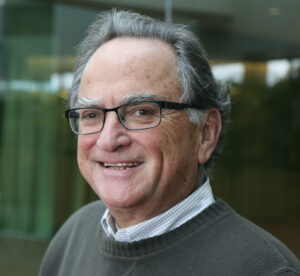
Since 1983 Miron Livny has been on the Computer Sciences Department faculty at the University of Wisconsin-Madison, where he is currently the John P. Morgridge Professor of Computer Science and a Vilas Research Professor. He serves as the director of the Center for High Throughput Computing (CHTC), is leading the HTCondor Software Suite effort and serves as the technical director of the OSG. He is a member of the scientific leadership team of the Morgridge Institute of Research where he leads the Research Computing theme.
Dr. Livny’s research focuses on distributed processing and object management systems and involves close collaboration with researchers from a wide spectrum of disciplines. He pioneered the area of High Throughput Computing (HTC) and developed frameworks and software tools that have been widely adopted by academic, government and commercial organizations around the world.
Dr. Livny is the recipient of the 2006 ACM SIGMOD Test of Time Award, the 2013 HPDC Achievement Award, the 2020 IEEE TCDP Outstanding Technical Achievement Award, the 2020 IEEE TCDP High Impact Paper Award and the 2023 UW-Madison Vilas Research Professor award.
Miron Livny received a BSc degree in Physics and Mathematics in 1975 from the Hebrew University and MSc and PhD degrees in Computer Science from the Weizmann Institute of Science in 1978 and 1984, respectively.
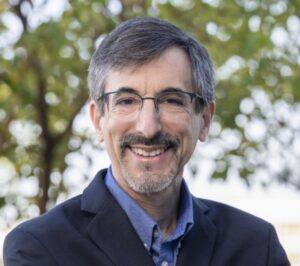
William (Bill) Miller is the Senior Director for Research Computing and Data for the University of Utah. In this role, he provides leadership, strategic direction, and execution for the University’s expanding research computing and data capabilities. His portfolio includes directing the 45-person Center for High Performance Computing (CHPC), expanding public-private partnerships on Artificial Intelligence infrastructure, and engaging broadly across the state, regionally and nationally, to advance discovery and innovation.
Bill is an engineer and scientist with careers in industry, academia, and government. As an engineer, he contributed to major manned and unmanned space missions at NASA and abroad. Interest in artificial neural networks led him to experimental neuroscience in which field he conducted research into the neural correlates of perception in the U.S. and Europe. Bill then joined the U.S. National Science Foundation, where he held program and management appointments across the agency, most recently as Senior Advisor in the NSF Office of Advanced Cyberinfrastructure (OAC) which included orchestrating the National AI Research Resource (NAIRR) Pilot. Bill also served an extended detail to the Department of Energy as Senior Technical Advisor in the Office of Science, where he co-led the Integrated Research Infrastructure (IRI) Architecture Blueprint Activity and oversaw deployment of the Perlmutter petascale computing resource at DOE’s Lawrence Berkeley National Laboratory.
Bill holds a B.S.E in Aerospace Engineering from the University of Michigan and a Ph.D. in Neuroscience at the University of California-Davis.

Dr. Christopher S. Simmons is Cambridge Computer Services’ Scientist in Residence, responsible for providing thought leadership for clients and cultivating relationships in our industry. He has over 25 years of experience in all facets of computational science and high performance computing. Christopher earned his PhD from the University of Texas at Austin in physical chemistry with an emphasis in computational quantum mechanics. He was the former Project Lead for OpenHPC and now heads up outreach activities for the project.

Monica VanDieren is a senior technical marketing engineer at NVIDIA. She leads the CUDA-Q Academic initiative, collaborating with universities worldwide to develop educational resources that offer practical, hands-on experience with hybrid quantum-classical computing. Prior to NVIDIA, she worked at IBM Quantum, creating training materials for enterprise clients. Monica holds a PhD in Mathematical Sciences from Carnegie Mellon University’s Pure and Applied Logic Program. With over 20 years of experience in academia, she has held positions at Stanford, the University of Michigan, and Robert Morris University.

Dr. James Barr von Oehsen is Executive Director of the Pittsburgh Supercomputing Center, a joint facility of the University of Pittsburgh and Carnegie Mellon University. He also serves as Vice Chancellor for Research Computing at Pitt and Senior Advisor for Research Computing and Data at CMU. He provides strategic leadership for PSC as a national research resource serving academia and industry. His research, funded by NSF and NIH, focuses on secure federated data platforms, advanced computing and networking, and workforce development. He also holds research professor appointments in electrical and computer engineering at both universities and in biomedical informatics at Pitt. A founding member of the Ecosystem for Research Networking (ERN) and the Keystone AI + Quantum Factory, he advances multi-institutional collaboration in research and innovation.