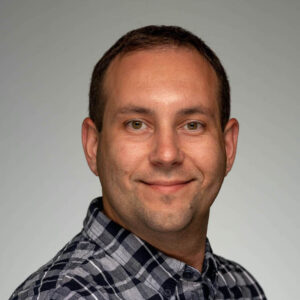
Travis L. Scholten, Ph.D –
Technical Lead, Public Sector, IBM Quantum
IBM T. J. Watson Research Center
Artificial intelligence and quantum computing are often discussed as separate technological revolutions, yet both are emerging within a broader transformation of the computing landscape. As AI drives unprecedented demand for computational resources and quantum hardware advances toward increasingly capable systems, researchers and institutions are confronting a common question: what will the next generation of research computing look like?
This talk explores the evolution from traditional high-performance computing environments toward more heterogeneous computing ecosystems that combine AI accelerators, cloud resources, classical supercomputers, and emerging quantum technologies. Drawing on developments in quantum-centric supercomputing, the session will examine why future scientific breakthroughs may depend not only on continued advances in hardware, but also on the software, workflows, orchestration, and cyberinfrastructure required to make effective use of increasingly diverse computational resource.
Attendees will gain a practical perspective on:
Dr. Travis L. Scholten is deeply engaged in the quantum computing ecosystem, driving strategic initiatives to leverage quantum computing for technical, economic, and social impact. Through this work, he advances regional quantum innovation hubs, educates diverse audiences on quantum computing’s potential, and informs high-impact public sector strategies. In earlier work, he fostered and led research collaborations on quantum benchmarking and applications.
He serves on the Board of Directors for the Unitary Foundation, a non-profit promoting innovation and opportunity in quantum technology, and on the Ecosystem Advisory Board for Fermilab’s Superconducting Quantum Materials and Systems Center (SQMS) . Additionally, he is the creator of The Quantum Stack, a Substack exploring quantum computing trends. Moreover, he is a non-resident fellow with the Foundation for American Innovation, where he was previously a Policy Hacker Fellow. There, he explores the intersection of quantum computing, technology, and society.
Dr. Scholten holds a PhD in Physics from the University of New Mexico and a BS in Physics from Caltech.
May 15 2026 12:00 – 1:00 PM ET
Bill Wistosky – Principal Quantum Systems Architect for Research and Development at SAS
Machine learning and artificial intelligence are often cited as application areas likely to benefit from quantum computing, but the timeline for realizing practical advantage remains an open question. Must meaningful quantum utility in machine learning wait for fault-tolerant hardware, or can it be explored in the current NISQ (Noisy Intermediate Scale Quantum) era?
This talk introduces quantum computing and the state of quantum machine learning (QML) from an applied research perspective, focusing on how quantum utility is being defined and evaluated. Drawing on ongoing work at SAS, representative QML techniques and hybrid quantum-classical workflows that are being investigated against real-world, customer-motivated problems will be discussed. The discussion centers on how QML methods are benchmarked against classical approaches, which problem types show early promise, and how hybrid quantum-classical techniques are being applied in practice.
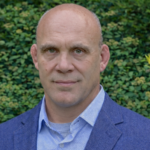
Bill Wisotsky began his academic career at SUNY Albany, graduating in 1994. While pursuing a Ph.D. in Behavioral Neuroscience at CUNY, he conducted biophysics research on neural pathways in the human visual system using visual evoked potentials. It was during this time, while studying photon absorption in the retina, that he first encountered the principles of quantum physics. Concepts like superposition and entanglement, initially explored out of necessity, quickly sparked a deep and lasting fascination.
This curiosity evolved into a passion as Bill delved into the emerging field of quantum computing. He immersed himself in the theoretical foundations and practical applications of quantum mechanics in computation, laying the groundwork for what would become a defining focus of his career.
Bill has been with SAS since 2002 as part of US Professional Services. Throughout this tenure, Bill continued to nurture his interest in quantum technologies. He actively pursued coursework, attended seminars, and experimented with various quantum environments. His hands-on exploration led to the development of several small-scale proofs of concept, that ultimately catalyzed the launch of the Applied Quantum AI Initiative at SAS. Today, Bill serves as the Principal Quantum Systems Architect in the Applied Architecture and Technology Practice of Research and Development, leading efforts to integrate quantum computing into real-world business solutions.
March 27, 2026 12:00 – 1:00 PM ET
Dr. Bruno Abreu, Deputy Scientific Director, Pittsburgh Supercomputing Center
Quantum computing promises to transform how we approach some of the most challenging computational problems, from molecular simulation to complex optimization. This talk introduces the core ideas of quantum information science at a high level and explains how they enable new computational models based on qubits, gates, and quantum circuits. We then explore key quantum algorithms, emerging application domains, and the current state of quantum hardware in the noisy intermediate-scale quantum (NISQ) era. Finally, the talk discusses how quantum processors are likely to integrate with high-performance computing systems as specialized processing units, highlighting the importance of hybrid quantum–classical workflows and the opportunities this emerging paradigm presents for research and cyberinfrastructure.